In an era where AI influences decision-making across numerous domains, the lack of transparency in black-box models presents a significant challenge to understanding and trusting their decisions. This hackathon project explores how Explainable AI (XAI) enables comprehension of complex machine learning models and augments human understanding of AI-driven decisions.
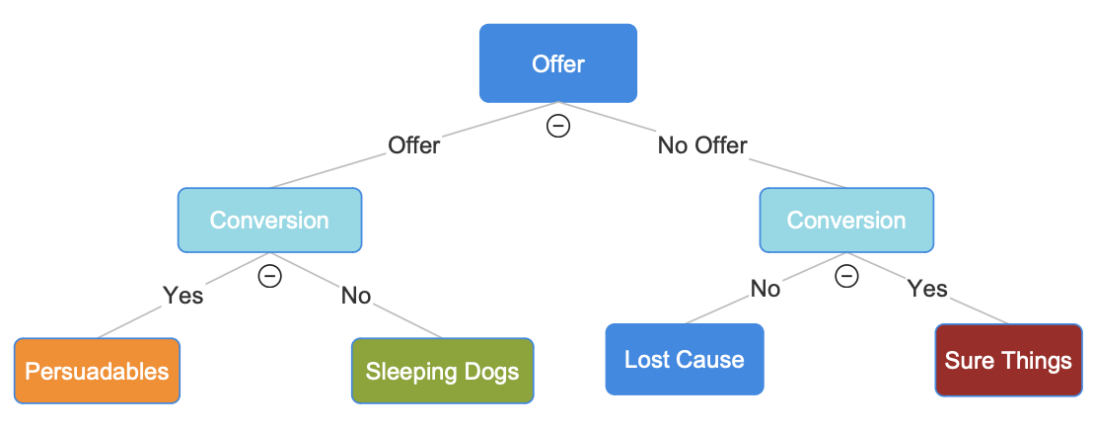
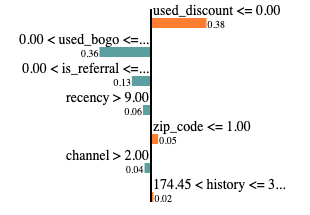
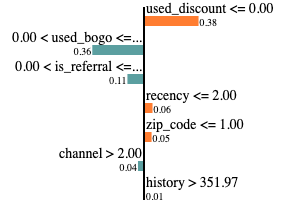
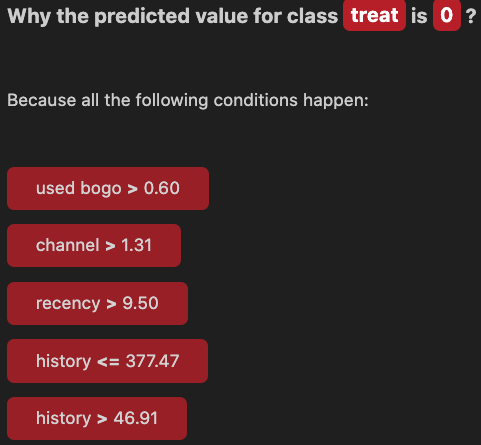
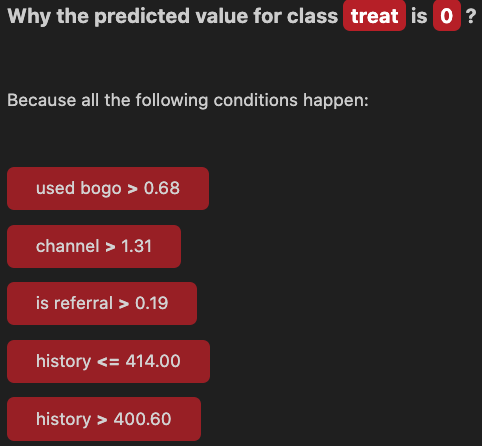
Our team implemented a gradient boosting classifier for uplift modeling in marketing campaigns and applied three XAI techniques, LIME , LORE , and SHAP , to uncover how the model arrives at its predictions. The project focuses on identifying which customers are most likely to respond positively to marketing promotions, categorizing them into four segments: Sure Things, Persuadables, Sleeping Dogs, and Lost Causes.
By evaluating these explanations across three critical dimensions, content, presentation, and user experience, we aimed to demonstrate how diverse XAI methods can serve stakeholders with varying technical expertise, from executives to data engineers.
Me and my team achieved third place while competing with other master and PhD students.
This hackathon provided invaluable insights into the practical application of Explainable AI and its critical role in modern machine learning workflows.
I discovered that even high-performing models can make correct predictions for potentially wrong reasons. Through systematic analysis of 10,000 correctly classified instances, we found that when considering only the top three features, nearly half of the predictions (4,820 instances) might have been correct but relied on unexpected feature combinations. This reinforced the importance of not just achieving high accuracy but understanding the reasoning behind model decisions.
The uplift modeling approach taught me the importance of proper problem framing. By creating customer segments based on treatment response patterns and addressing class imbalance through SMOTE, I had additional proof that thoughtful data preparation directly impacts model interpretability. The decision to focus on "Persuadables", customers who buy only when receiving promotions, demonstrated how domain knowledge shapes both model design and business value.
The hackathon emphasized evaluating explainability along multiple dimensions. Correctness and comprehensiveness ensure explanations capture all relevant factors. Continuity validates that similar customer profiles receive consistent explanations. Compactness and composition affect how easily users can digest information. Context and coherence determine whether explanations align with real-world expectations. This evaluation framework showed me that explainability is as much about user experience as it is about technical accuracy.
Perhaps the most valuable lesson was understanding that effective XAI must be tailored to its audience. Executives need high-level insights for strategic decisions, marketing agents require actionable customer insights, and data engineers need detailed technical validation. By providing explanations suited to each user group's expertise level, XAI transforms from a technical exercise into a practical tool that drives trust and adoption across an organization.